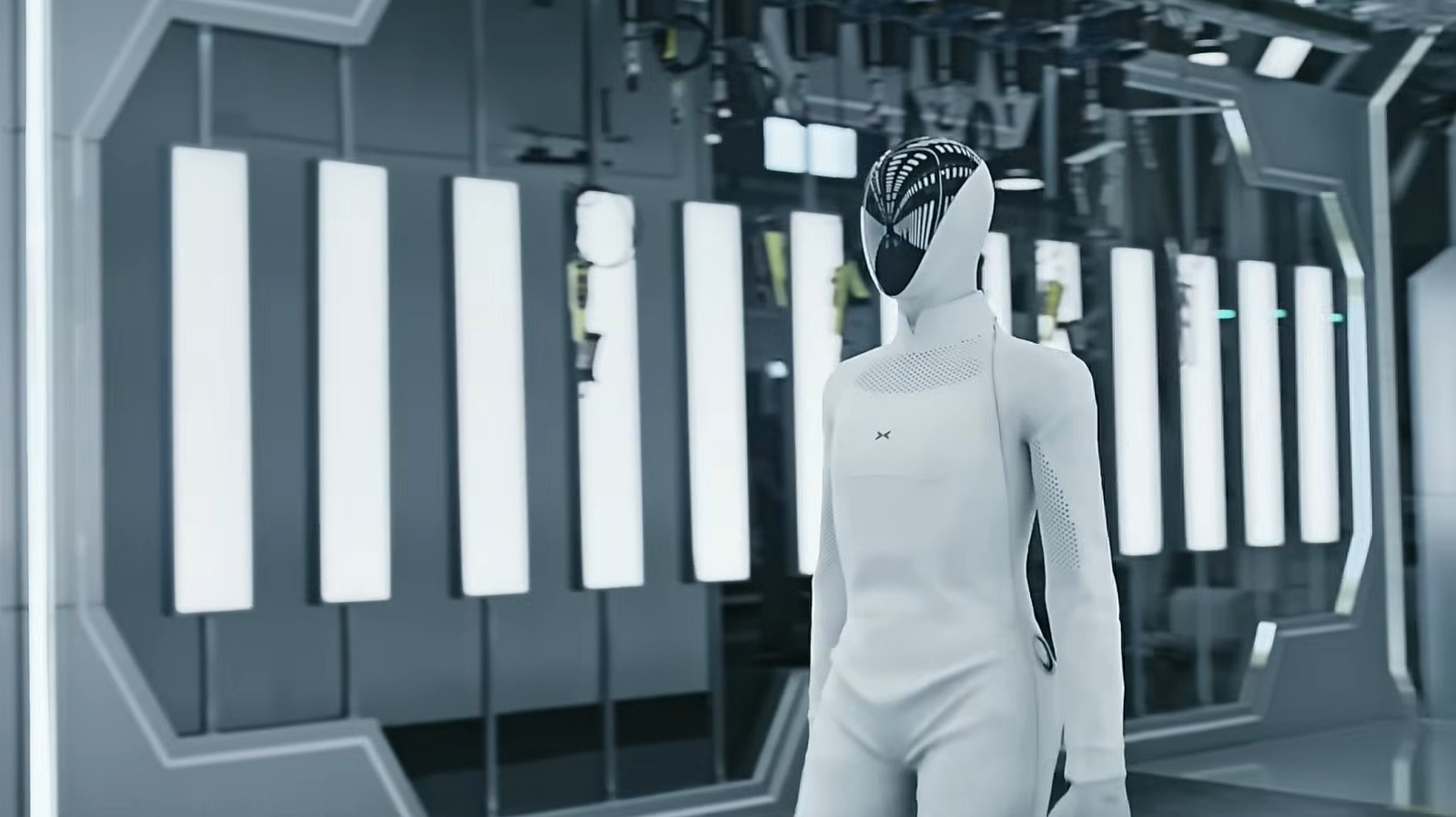
Iron made its own exit from XPENG’s new production line, though completing a working day will be a tougher test. XPENG's latest factory arrival made its own exit. The Chinese electric vehicle manufacturer says its Iron humanoid robot walked autonomously off its newly operational production line after its assembly was complete, paving the way for mass production later this year.
Chairman and CEO He Xiaopeng even bestowed a staff badge on it. Onboarding paperwork apparently is already sorted too. In a September 7 announcement , XPENG claimed that over 80 percent of the line's core processes are automated.
It's adapting quality systems from its car business and applying them to make robots consistently as production increases. "Today's step is small, but XPENG is building the production lines for an entirely new product category," He said. The walk is an attractive way for XPENG to mark that progress, but it doesn't tell us much about whether Iron can make it through a working day.
XPENG did not reveal the line's current output or how much testing was done before the walk, and mass production is still a year-end goal. Iron's first jobs will be in XPENG stores and campuses VGV MEDIA/Shutterstock Your first encounter with Iron could be during a showroom visit. XPENG has previously mentioned reception and guided tour responsibilities, along with sales assistance.
It plans to deploy robots in its own stores and campuses first, with deliveries in China and overseas markets planned for 2027. The announcement did not specify US availability or a price. XPENG's latest announcement states that Iron has 76 degrees of freedom across its body and 21 in each hand, describing the number of independent ways it can move.
That articulation supports walking and moving objects around in a space designed for humans. The three Turing AI chips provide up to 2,250 trillion operations per second. XPENG says this lets Iron run its AI model onboard and perform complex tasks without a remote operator.
While processing information locally can help to cut down on delays, a large computing number doesn't tell us how well Iron would handle a shopper going off-script. XPENG also states that the outer structure was designed to be flexible with safety in mind. That's important for a robot designed to interact with customers, but the announcement doesn't provide an independent safety evaluation.
These are planned jobs, with everyday performance still to be established. Tesla has company in the humanoid robot race Cheng Xin/Getty Images The Tesla parallel is easy to spot. Both carmakers are eager to apply their AI and manufacturing skills to robots.
Tesla announced that it would convert Model S and X production lines for Optimus , and its second-quarter filing included preparations for large-scale robot production. It's too early to declare a winner, though. Others have already built humanoids in meaningful quantities.
In April, Figure reported that it had produced over 350 Figure 03 robots and demonstrated a production cycle of one robot per hour. Those robots were allocated to uses including internal development and data collection, so the total shouldn't be read as customer deliveries. A more realistic comparison is what robots have achieved once they have left the factory.
BMW says Figure's earlier Figure 02 robot inserted sheet-metal parts for welding at its Spartanburg plant. That was a specific, repetitive assignment, rather than building cars from scratch. Across ten months, it supported production of more than 30,000 BMW X3s.
Source: engadget.com