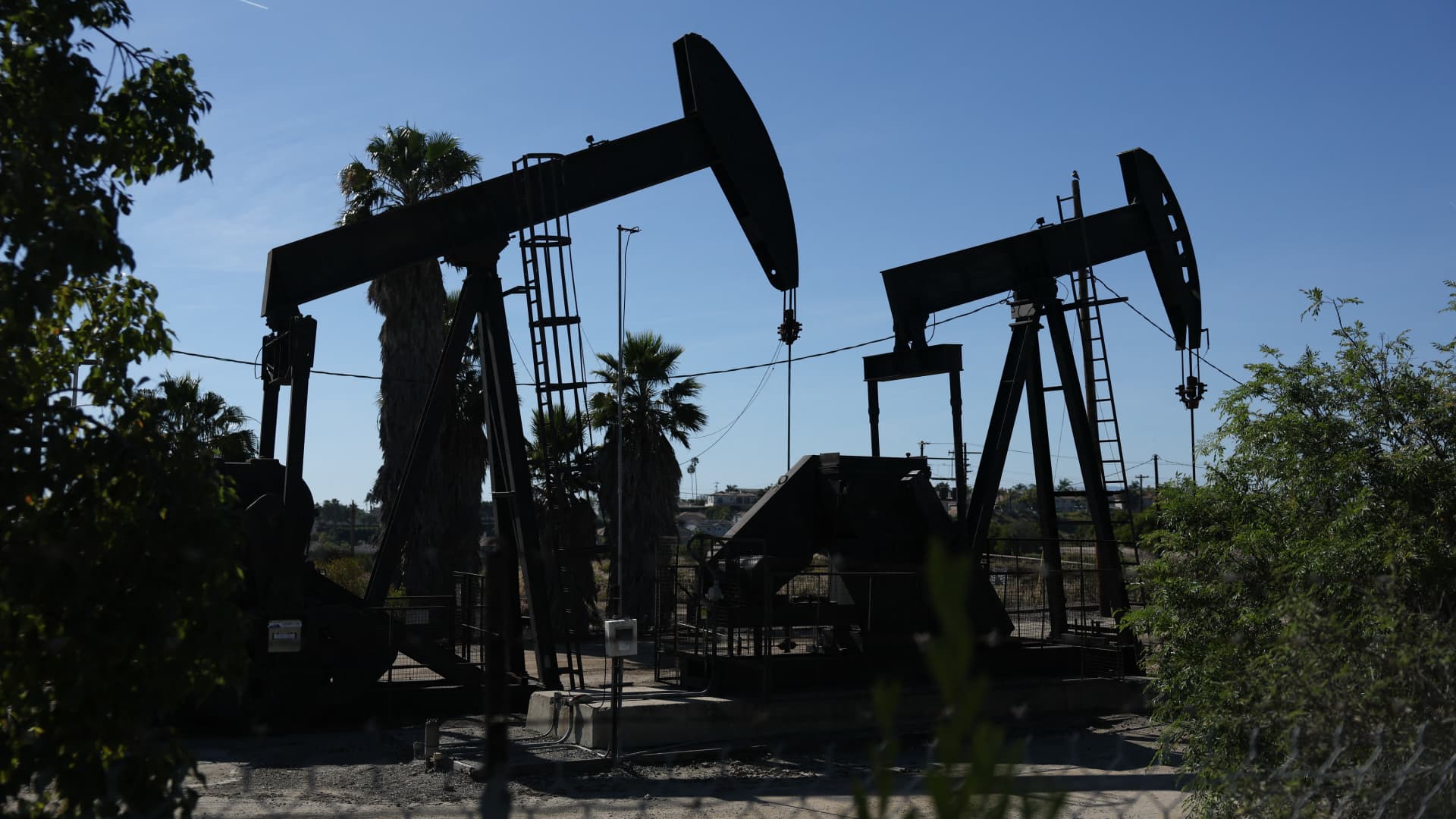
Oil prices fell on Wednesday after an unexpected build in U.S. crude inventories, while investors assessed supply risks after Saudi Arabia suspended oil loadings at its Yanbu port following an attack on its East-West pipeline to the Red Sea. Patrick T. Fallon | Afp | Getty Images Oil prices fell on Wednesday after an unexpected build in U.S. crude inventories, while investors assessed supply risks after Saudi Arabia suspended oil loadings at its Yanbu port following an attack on its East-West pipeline to the Red Sea.
Brent crude futures fell 93 cents, or 0.86%, to $107.82 a barrel at 0028 GMT, while U.S. West Texas Intermediate futures were down 97 cents, or 0.92%, at $104.86 a barrel. Both benchmarks settled more than $3 higher and at their highest levels since May 19 on Tuesday, as the Yanbu loading suspension stoked supply concerns and Saudi Arabia cut oil shipments to Europe U.S. crude oil, gasoline and distillate inventories all rose last week, market sources said on Tuesday, citing data from the American Petroleum Institute.
Crude inventories rose by 7.1 million barrels in the week ended September 11, the sources said, citing API data. That compared with analysts' expectations for a draw of about 1.6 million barrels, according to a Reuters poll. API's data showed unexpected builds in gasoline and diesel inventories have weighed on prices, but regional stock increases do not change the underlying tightness in the global crude market, Haitong Futures said in a note.
Sources said on Tuesday that oil loadings at Saudi Arabia's Yanbu port had been suspended after the world's biggest crude exporter shut its East-West pipeline following an attack by Yemen's Iran-aligned Houthis on Friday. Saudi Arabia has used the pipeline to reroute around 4 million barrels per day, or about 4% of global supply, to the Red Sea port. The U.S. energy secretary said crude should resume flowing through Saudi Arabia's vital East-West pipeline within days.
However, sources who spoke to Reuters gave varying estimates of how long the pipeline could remain offline. One said repairs could take five to six weeks, while another said the pipeline could resume partial pumping sooner as repairs continue. In Libya, unrelated to the Iran conflict, the National Oil Corporation (NOC) said operations at three oil fields were suspended after protesting members of the Petroleum Facilities Guard shut a valve on the Hamada-Zawiya crude export pipeline.
However, Libya's oil production has not been significantly affected by the shutdowns and remains at about 1.4 million barrels per day, NOC Chairman Massoud Suleman told Reuters.
Source: CNBC